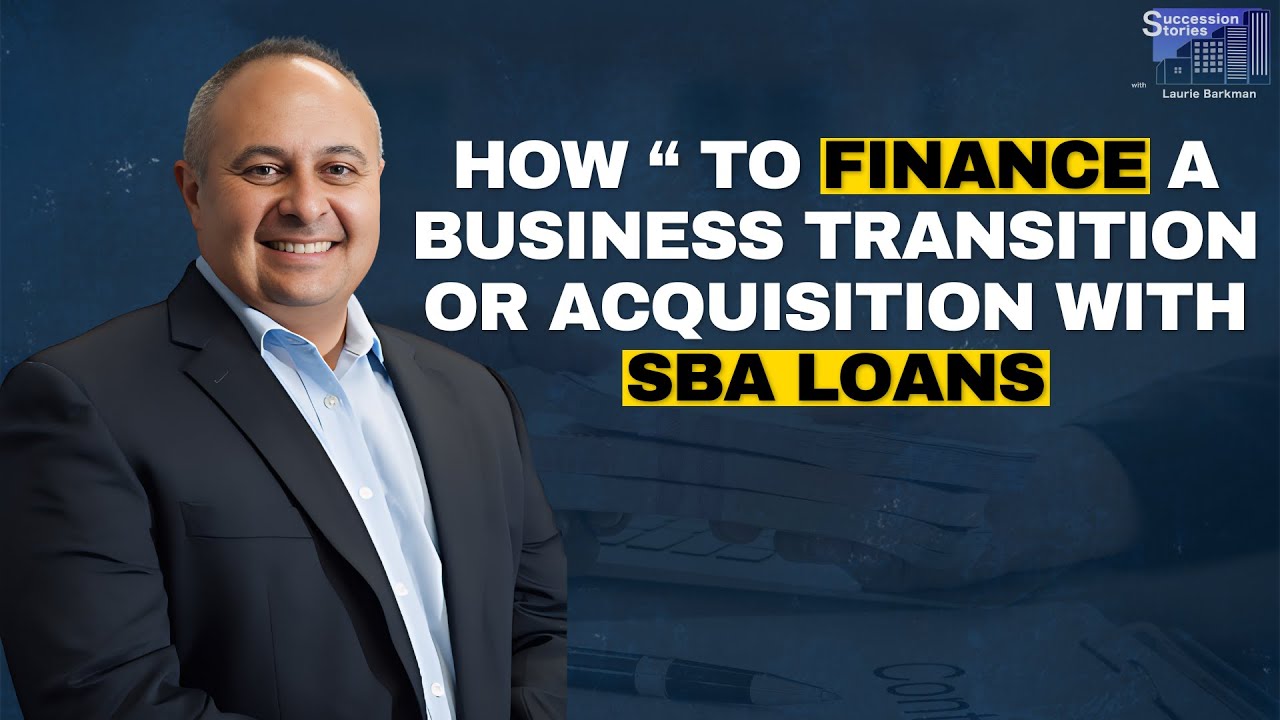
Succession Stories EP221: How to Finance a Business Transition or Acquisition, David Miller
What does it take to finance a business transition or acquisition? In this episode, Laurie Barkman sits down with David Miller, Executive Vice President at Enterprise Bank, to demystify lending for business owners — from SBA loans to insider buyouts. David shares how banks assess deals, why management continuity matters most, and how entrepreneurs can become “bankable” when it’s time to grow or exit.
The Overlooked Financing Option That Can Help You Buy a Business
After more than 220 episodes of Succession Stories, I finally welcomed my first lender to the show— David Miller, Senior Vice President of Enterprise Bank. David and I met at an Exit Planning Institute event, where we quickly connected over our shared mission to help small and mid-market business owners grow and transition successfully.
When it comes to buying or transitioning a business, one of the biggest questions owners face is how to fund the deal. In this episode, I sat down with David to unpack the ins and outs of SBA lending — and how these programs can help business buyers and successors take the next step with confidence.
David shared practical insights on everything from conventional vs. SBA lending to insider buyouts and what banks really look for in a successful loan application.
Understanding Conventional vs. SBA Lending
Business owners often think of financing only in terms of “getting a loan.” But there’s a big difference between conventional and SBA (Small Business Administration)lending.
David explained that conventional lending typically supports growth tied to hard assets— like equipment, facilities, or inventory. SBA lending, on the other hand, is designed to help when a business has strong fundamentals but lacks the kind of collateral traditional banks require.
“Think of the SBA guarantee as an insurance policy,” David said. “It lets banks take a little more risk on good deals.”
SBA loans can be an attractive alternative to giving up equity. As David put it:
“You pay me monthly, but I don’t take your profits forever.”
Structuring for Growth: Working Capital and Cash Flow
Not all financing is created equal. David outlined two key types of working capital:
Revolving Line of Credit– Ideal for short-term cash flow gaps, such as payroll or seasonal fluctuations.
Permanent Working Capital Loan– Best for long-term investments like expanding a division or hiring new staff.
The key takeaway? Match the financing structure to the business purpose. Short-term needs should never be financed with long-term debt — and vice versa.
When SBA Loans Make Sense
SBA programs can be a game-changer for service-based or asset-light businesses— think marketing agencies, construction management firms, or consultancies. These companies often don’t have heavy equipment or property to use as collateral.
“SBA loans substitute for hard collateral,” David explained. “They allow financing based on cash flow and goodwill — not just assets.”
This flexibility is particularly valuable during acquisitions, where much of the purchase price may represent goodwill or intangible value.
Collateral, Cash Flow, and Confidence
Many business owners hesitate to pursue SBA financing because they fear putting personal assets at risk. David reassured that strong, cash-flowing businesses can often qualify without pledging outside collateral.
And there’s good news on the economic front — post-COVID financials are stabilizing, making it easier for businesses to show healthy performance from 2023 through 2025.
SBA Policy Changes: Back to the Basics
David noted that the SBA recently tightened standards after a period of looser, fintech-driven lending. The focus is now back on sustainable, risk-balanced programs that support U.S. manufacturing, onshoring, and small business resilience.
“The SBA returned to its zero-subsidy model,” David said. “That’s good for borrowers and taxpayers — it keeps the system strong.”
Financing Insider Buyouts
Most business sales don’t happen to private equity firms — they happen inside the company. Whether it’s a family succession or a key employee buyout, these deals are often smoother because the buyer already knows the business.
“We actually prefer insider deals,” David shared. “The management risk is lower, and continuity is higher.”
SBA financing is particularly well-suited for these transactions, especially when the deal includes heavy goodwill and limited hard collateral.
What Lenders Look For
When evaluating a business acquisition, banks prioritize:
Management competence and continuity
Fair valuation backed by a third-party appraisal
Personal commitment from the buyer (“skin in the game”)
David emphasized that SBA financing is a bridge, not a forever loan. Once the business demonstrates strong performance post-transition, the financing can convert to a conventional loan with better terms.
Advice for Aspiring Business Buyers
David closed with three practical takeaways:
Don’t assume you can’t afford to buy a business.SBA loans can finance up to 90% — or even 95% with seller participation.
Learn the business deeply. Immerse yourself in its operations and industry before acquiring.
Commit fully. Bring personal investment and surround yourself with experts — a CPA, attorney, insurance advisor, and exit planner.
“You can’t pull off a business acquisition alone,” David said. “Get good professional help.”
Beyond Banking: Building a Small Business Ecosystem
What sets Enterprise Bank apart is its holistic approach. Beyond traditional lending, the bank provides services like bookkeeping, IT, marketing, and even podcast production— helping small business clients succeed long after the loan closes.
As we wrapped up, I told David:
“You’re a wonderful resource, and I appreciate this partnership.”
If you’d like to learn more about SBA financing, insider buyouts, or succession planning, listen to the full episode of Succession Stories and check out Enterprise Bank’s podcast, Inside the Vault.
🎧 Listen to the full episode on Succession Stories Podcast: How to Finance a Business Transition or Acquisition with SBA Loans — David Miller, Enterprise Bank.
Watch the full YouTube Episode here:
Connect with David Miller:
Website: https://www.enterprisebankpgh.com/
LinkedIn: https://www.linkedin.com/in/david-miller-0b668386/
Special thanks to Ryan Nolf, Marketing Director, for producing this Succession Stories episode live in studio at Enterprise Marketing.
This Show Is Sponsored by The Business Transition Sherpa®
Learn what every entrepreneur needs to know about building value and avoiding pitfalls!
📖 Get your FREE digital copy of The Business Transition Handbook:
https://lauriebarkman.me/book
📣 Write a Podcast Review: ratethispodcast.com/successionstories