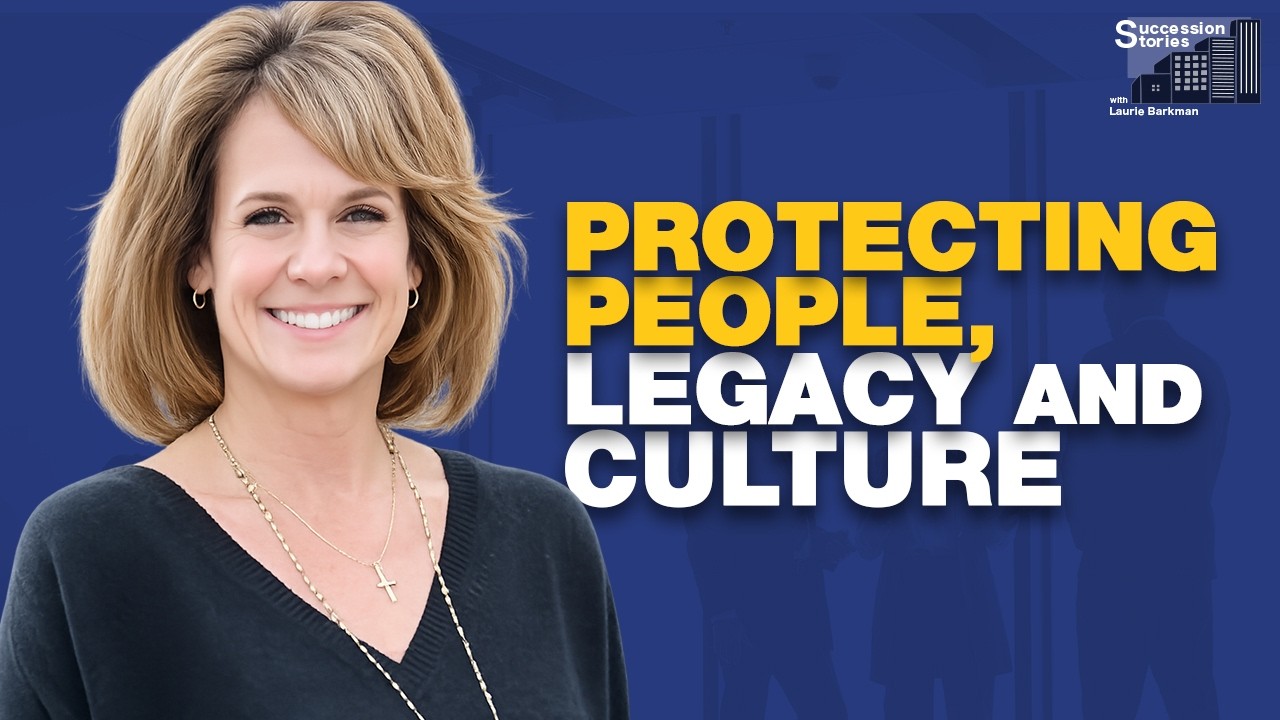
Succession Stories EP227: Protecting People, Legacy, and Culture with Amy Veltri, NGE
Amy Veltri, Co-Founder and CEO of NGE, an environmental and geotechnical engineering firm. Amy built the company with her brother nearly 20 years ago, and made the deliberate choice to transition to 100% employee ownership through an ESOP. Amy shares the personal journey of weighing a third-party sale, doing nothing, or choosing a path that protected the people who helped build the business
From Founder to Employee Ownership: A Real-World Succession Story
Recently, I had the pleasure of recording a truly special episode of Succession Stories, one that marked our 6th anniversary.
Reaching this milestone gave me a moment to reflect on the journey: the conversations, the insights, and the incredible community of founders, advisors, and leaders who have been part of it along the way.
To celebrate, we did something new. For the first time, we recorded in front of a live studio audience in Pittsburgh, in partnership with the Pittsburgh chapter of the Exit Planning Institute.
Bringing this conversation into a room full of engaged business owners and advisors made it even more powerful because the topic we explored is one that so many eventually face.
The hardest part of entrepreneurship isn’t always building the business.
It’s deciding what happens to it next.
For this milestone episode, I was joined byAmy Veltri, co-founder and CEO of NGE. Amy co-founded the environmental and geotechnical engineering firm with her brother in 2002 and spent more than two decades growing it into a trusted and respected practice.
But like many founders, Amy eventually faced some big questions:
Who should own the business after you?
How do you protect the culture you’ve built?
How do you create a future for the employees who helped make the company successful?
Our conversation explored exactly that.
Is There an “Entrepreneurial Gene”?
I started by asking Amy a question I’ve wondered about for years:
Is there such a thing as an entrepreneurial gene?
Her answer was thoughtful and honest.
Amy believes some traits of entrepreneurship are innate, especiallydrive. That internal motivation to build something, solve problems, and keep pushing forward isn’t easily taught.
But many other entrepreneurial skills can absolutely be developed, including:
Communication
Organizational discipline
Decision-making
Adaptability
In other words, successful entrepreneurs are often a mix of natural drive and learned leadership.
Building a Business with Family
Another layer to Amy’s story is that she co-founded NGE with her brother.
For many entrepreneurs, partnering with family can be both rewarding and complicated. As Amy joked, you don’t want business disagreements to ruin Thanksgiving dinner.
Early on, they intentionally structured their roles to play to their strengths:
Amy focused on strategy, leadership, and big-picture decisions as CEO.
Her brother focused on technical operations and project execution as President.
They also put thoughtful governance in place, including an operating agreement that defined which major decisions required both of their approvals.
That level of foresight helped prevent conflict and created clarity as the company grew.
Scaling Comes with Real Challenges
Like most growing companies, NGE faced its share of scaling challenges.
One of the biggest? Talent.
Finding and retaining skilled professionals in specialized fields can be difficult, especially when the company is growing quickly.
Amy shared that one of their most effective recruiting strategies wasn’t job boards, it was referrals from existing employees and trusted partners. When someone inside the organization recommends a candidate, the alignment is often stronger from the start.
It’s a reminder that sometimes the most powerful hiring channels are already within your network.
Thinking About Exit Earlier Than You Expect
When I asked Amy when she first started thinking about succession planning, she gave an answer I wish more founders considered:
“You should know your exit strategy the day you start the business.”
That advice may sound surprising, but it’s powerful.
When you understand where you eventually want to go, you can make better decisions along the way, about growth, leadership development, ownership structure, and value creation.
Over time, Amy and her brother considered several possible paths:
Selling to an external buyer
Continuing ownership and simply stepping back
Transitioning ownership to employees through an ESOP
They even went through due diligence with a potential buyer about ten years ago. But just weeks before closing, the deal began to shift in ways that didn’t feel right.
That moment helped them realize something important.
Selling externally might benefit them financially, but it didn’t feel aligned with the people who helped build the company.
Why They Chose an ESOP
Ultimately, Amy and her brother chose to transition the company to an Employee Stock Ownership Plan (ESOP).
An ESOP allows employees to gradually receive ownership shares in the business, creating a structure where the company is owned by the people who work there.
For NGE, the decision made sense on several levels.
Financially, the structure offered significant tax advantages. Once the company became 100% ESOP-owned, it no longer paid federal income tax, something that dramatically improved cash flow and helped support the transaction itself.
But the cultural impact was even more powerful.
Each year, employees receive stock allocations and see the value of their shares increase as the company grows.
As Amy described it, this creates a powerful sense of ownership:
Employees see that their work directly contributes to increasing the value of the company, and their own financial future.
Leadership Succession Is the Next Step
Ownership succession is only part of the transition.
Leadership succession matters just as much.
Amy and her brother have already built a strong organizational structure with leaders responsible for each service line. However, Amy is currently searching for the right successor for her CEO role as she prepares to retire at the end of next year.
Finding someone who combines technical expertise with strong business leadership isn’t always easy, but starting the search early is critical.
Looking Ahead to the Next Chapter
After more than two decades of leadership, Amy is looking forward to something many entrepreneurs struggle to imagine:
Slowing down.
With her first grandchild arriving soon, she’s excited to step away from the daily pressures of running a company and enjoy the next chapter of life.
As she candidly shared, the responsibility of being a business owner is enormous. You’re not only responsible for the company, you’re responsible for the people and families who depend on it.
That weight can be deeply rewarding, but it’s also real.
And after 25 years, she’s ready for a well-earned change of pace.
A Final Lesson for Founders
When I asked Amy what advice she would give her younger self about transition planning, her answer was simple:
Start earlier!
The earlier you begin thinking about succession, the more options you’ll have and the more intentional your decisions can be.
Succession isn’t just about the final transaction.
It’s about protecting the company you’ve built, honoring the people who helped build it, and creating a future that reflects your values as a founder.
As I reflect on six years of Succession Stories, I’m incredibly grateful for the conversations, the insights, and the community that has grown around this show.
This episode is a perfect example of what these past six years have been about: real founders sharing real decisions, navigating complex transitions, and building businesses that mean something far beyond the numbers.
If there’s one takeaway, it’s this: succession isn’t a moment in time, it’s a journey. And the earlier you start, the more intentional, thoughtful, and impactful that journey can be.
Whether you’re actively planning your exit or just beginning to think about what comes next, I hope this conversation gives you clarity, confidence, and a new perspective on what’s possible.
You won’t want to miss this special 6th anniversary episode of Succession Stories.
By your side,
Laurie
Watch the full YouTube Episode here:
Connect with Amy:
Website: https://www.ngeconsulting.com
Email: [email protected]
This Show Is Sponsored by The Business Transition Sherpa®
Learn what every entrepreneur needs to know about building value and avoiding pitfalls!
📖 Get your FREE digital copy of The Business Transition Handbook:
https://lauriebarkman.me/book
📣 Write a Podcast Review: ratethispodcast.com/successionstories